

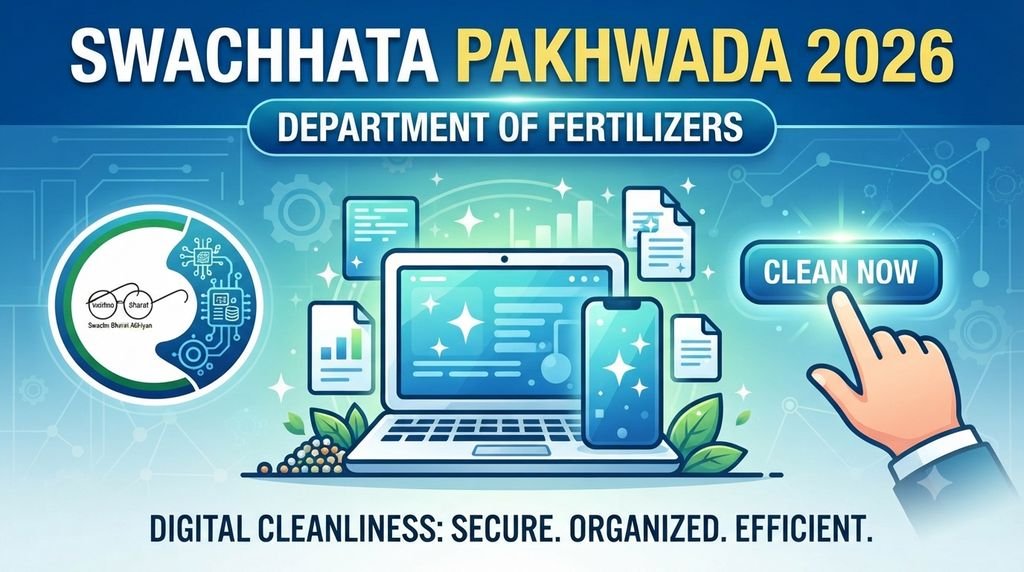
The Department of Fertilizers, under the Ministry of Chemicals and Fertilizers, will observe Swachhata Pakhwada-2026 from September 1 to September 15, 2026.
The nationwide cleanliness campaign will focus not only on maintaining clean and hygienic physical workplaces, but also on improving digital cleanliness, record management, e-Office systems and paperless administrative processes.
The initiative aims to promote a cleaner, greener and more efficient workplace culture while strengthening administrative efficiency, transparency and digital governance.
Swachhata Pakhwada 2026: Focus on Physical and Digital Cleanliness
The Department of Fertilizers has adopted a broader approach to cleanliness this year. Along with conventional cleanliness activities, the campaign places special emphasis on Digital Cleanliness and Record Management.
The objective is to ensure that government offices remain organised not only in their physical surroundings but also in their digital records, databases, e-files and official communication systems.
The initiative will also promote environmental conservation, reduction of unnecessary paper usage and better utilisation of digital administrative platforms.
Digital Record Management and Data Hygiene
One of the major components of Swachhata Pakhwada 2026 will be a department-wide drive to improve digital record management.
The Department plans to streamline its e-Office and digital filing systems through several measures.
These include:
- Reviewing pending e-files in the e-Office system.
- Digitally closing and archiving disposed cases.
- Systematising departmental databases.
- Removing redundant and obsolete digital records.
- Clearing spam and unnecessary attachments from official email accounts.
- Optimising server storage by removing unnecessary files.
- Improving the overall organisation of digital records.
The emphasis on digital hygiene reflects the increasing importance of electronic records in modern government administration.
Union Minister Shri Jagat Prakash Nadda to Inaugurate the Campaign
The Swachhata Pakhwada will begin with a cleanliness message from Union Minister of Health & Family Welfare and Chemicals & Fertilizers, Shri Jagat Prakash Nadda.
As part of the inaugural programme, officers and staff of the Department will take the Swachhata Pledge.
The campaign will also promote public awareness about reducing the use of single-use plastics and encouraging citizens to adopt environmentally responsible alternatives such as cloth bags and reusable bottles.
Key Activities Planned During Swachhata Pakhwada 2026
The Department has planned a series of activities throughout the 15-day campaign.
September 2 – Physical Record Management
The Department will inspect physical record rooms and identify old and obsolete files.
Files eligible for disposal will be weeded out in accordance with the applicable Record Retention Rules.
This exercise is expected to improve record-room organisation while freeing up valuable office space.
September 3 – Green Workplace Initiative
A Green Workplace Initiative will be organised with awareness-themed cotton T-shirts and a plantation drive.
Senior officers will lead the plantation activity, reinforcing the campaign’s focus on environmental conservation and sustainable workplaces.
September 7 – Scrap and E-Waste Disposal
The Department will identify condemned equipment, obsolete furniture and e-waste for systematic disposal.
The disposal process will be carried out through prescribed procedures, helping offices maintain cleaner premises while ensuring appropriate handling of obsolete materials.
September 8 – Public Grievance Redressal
Special attention will be given to pending public grievances and references.
The Department will undertake an expedited review and disposal of references received through platforms and authorities including:
- CPGRAMS
- Prime Minister’s Office
- Members of Parliament
- State Governments
The activity is aimed at making grievance handling more responsive and efficient.
September 9 – Digital Cleanliness Day
September 9 will be observed as a dedicated Digital Cleanliness Day.
Officials will undertake a department-wide digital sanitisation exercise covering:
- E-files
- Cloud drives
- Official email inboxes
- Digital records and databases
The exercise will focus on eliminating unnecessary digital material and systematically organising important electronic records.
September 10 – Community Shramdaan
Officials will participate in collective Shramdaan activities.
Cleanliness drives will be conducted across office premises and surrounding areas, with participation encouraged from officers and staff.
The activity aims to reinforce the idea that cleanliness is a shared responsibility.
September 11 – Hygiene and Infrastructure Audit
A signature campaign on sustainability will accompany safety and hygiene audits.
The Department will conduct rigorous inspections of:
- Drinking water facilities
- Sanitation facilities
- Workplace infrastructure
- Safety arrangements
The objective is to ensure that workplace hygiene and essential facilities remain safe and properly maintained.
September 14 – Creative Engagement and Innovation
Employees will be encouraged to participate in essay writing and ideation contests.
The activities will focus on ideas for institutionalising:
- Cleanliness
- Digital efficiency
- Sustainable workplace practices
- Better administrative systems
The programme is intended to encourage employees to contribute innovative ideas towards long-term improvements.
Moving Towards Paperless and Efficient Governance
A notable feature of Swachhata Pakhwada 2026 is its emphasis on the connection between physical cleanliness and digital governance.
Government offices increasingly depend on electronic files, databases, email systems and e-Office platforms. Managing these systems efficiently can help reduce unnecessary storage, improve accessibility of records and strengthen administrative transparency.
The Department’s focus on paperless cleanliness therefore extends the traditional concept of Swachhata into the digital workplace.
Environmental Sustainability as a Key Priority
The campaign also places considerable emphasis on environmental responsibility.
Measures such as plantation drives, discouraging single-use plastics, promoting reusable bottles and appropriate disposal of e-waste are intended to encourage more sustainable workplace practices.
By integrating environmental awareness with workplace cleanliness, the campaign seeks to make sustainability part of everyday administrative culture.
Strengthening Administrative Efficiency
The activities planned during the fortnight go beyond routine cleaning.
The review of pending files, disposal of obsolete records, digital record management and expedited grievance redressal are all designed to contribute to a more efficient and responsive administration.
The campaign therefore combines:
Clean workplaces + organised records + digital hygiene + environmental sustainability + responsive governance
This integrated approach can help create a more productive and citizen-focused administrative environment.
A Smarter and Greener Workplace
The Swachhata Pakhwada-2026 initiative reflects the Department of Fertilizers’ effort to make cleanliness a continuing administrative practice rather than a one-time activity.
The emphasis on both physical and digital cleanliness recognises the changing nature of government workplaces, where efficient management of electronic information is increasingly as important as maintaining clean physical premises.
With activities ranging from record management and e-waste disposal to plantation drives, grievance redressal, Shramdaan and digital sanitisation, the campaign seeks to promote a culture of cleanliness, sustainability and efficiency.
Conclusion
The Department of Fertilizers’ Swachhata Pakhwada 2026, being observed from September 1 to 15, 2026, represents a comprehensive approach to workplace cleanliness and administrative reform.
By giving special importance to Digital Cleanliness and Record Management, the campaign expands the traditional concept of Swachhata to include e-files, databases, official emails and digital records.
At the same time, initiatives relating to environmental conservation, e-waste disposal, public grievance redressal, sanitation and community participation reinforce the broader objective of creating cleaner and more responsive government workplaces.
The campaign ultimately seeks to build a smarter, greener and more efficient administrative ecosystem, where cleanliness, digital discipline and sustainable practices become part of everyday governance.