
The Government of India is taking significant steps to improve the awareness, accessibility, and availability of free Ayush medicines through digital platforms, training programmes, and large-scale public outreach initiatives. These efforts are being implemented by the Ministry of Ayush under the National Ayush Mission (NAM) to promote preventive and holistic healthcare across the country.
The details were shared by Prataprao Jadhav, Minister of State (Independent Charge) for Ayush, in a written reply in the Lok Sabha on 13 March 2026.
Digital Transformation Through Ayush Grid and AHMIS
To enhance transparency and efficiency in healthcare delivery, the Ministry has developed digital platforms like the Ayush Hospital Management Information System (AHMIS) under the Ayush Grid.
This system enables real-time tracking of medicine availability and inventory management across Ayush healthcare facilities. Doctors and pharmacists can access updated information, ensuring better distribution and availability of medicines to patients.
Awareness Campaigns Through BCC and IEC Initiatives
Under the National Ayush Mission, State and Union Territory governments are supported in implementing Behaviour Change Communication (BCC) and Information, Education, and Communication (IEC) activities.
These campaigns aim to:
Promote Ayush-based preventive healthcare practices
Encourage adoption of healthy lifestyles
Increase awareness about the benefits of traditional medicine systems
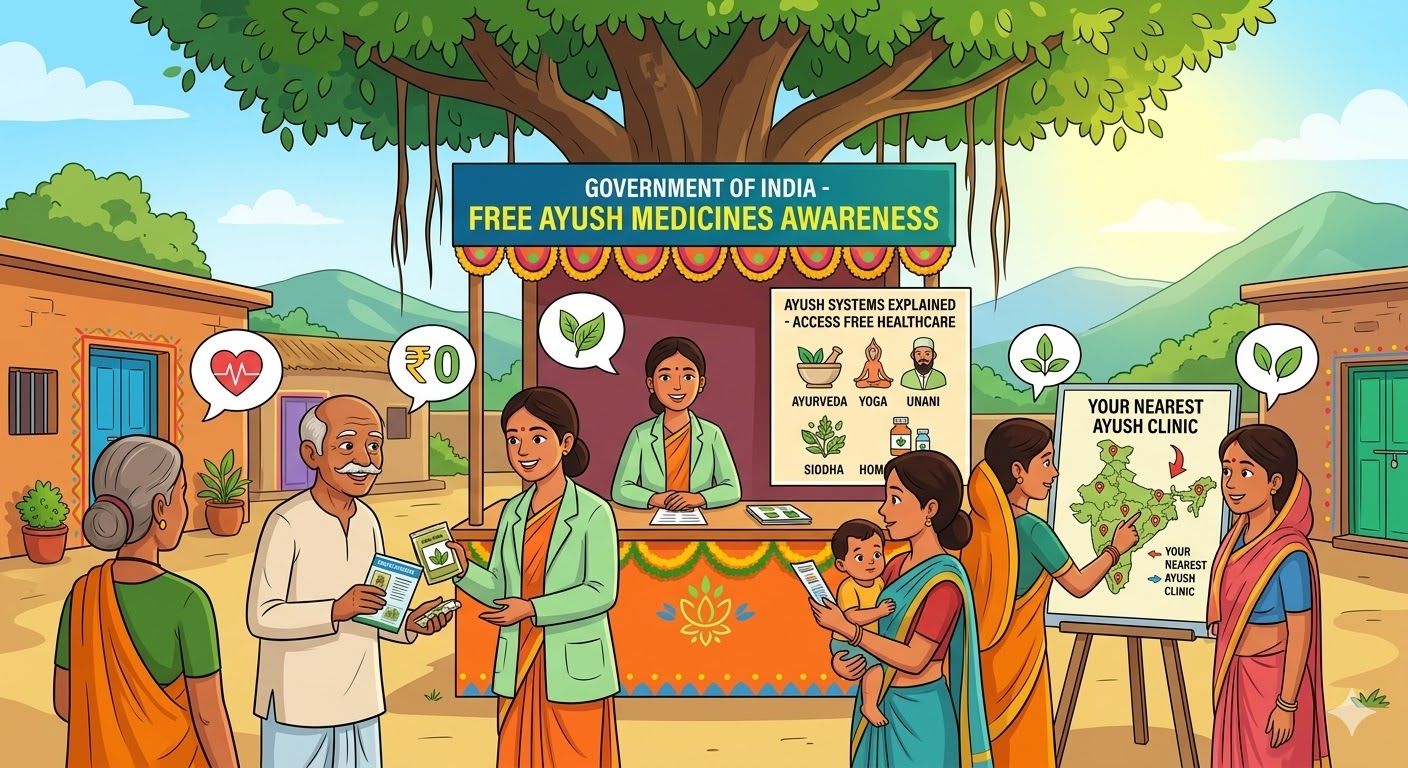
Mass media platforms and community outreach programmes are being used to reach a wider population, ensuring that people understand and trust Ayush systems.
Ayush Public Health Programmes and Outreach Activities
The Ministry is also conducting Ayush Public Health Programmes that include:
Health camps and awareness drives
Preventive and promotive healthcare services
Integration with other healthcare systems through referral linkages
These programmes provide curative and rehabilitative services, either as standalone treatments or alongside conventional medicine.
12,500 Ayushman Arogya Mandirs Operational Across India
A major milestone under NAM is the operationalisation of 12,500 Ayushman Arogya Mandir (AAM Ayush) centres across the country.
These centres serve as grassroots healthcare hubs where communities can access free Ayush medicines, consultations, and wellness guidance.
Training and Capacity Building for Healthcare Workers
The Ministry has implemented extensive training programmes to strengthen the Ayush ecosystem. Through Training of Trainers (ToT) initiatives, healthcare workers such as ASHA and ANM workers are trained to:
Promote Ayush-based wellness practices
Guide communities on preventive healthcare
Address common health issues using traditional methods
Additionally, Master Trainer programmes were conducted in collaboration with the Central Health Education Bureau (CHEB), Directorate General of Health Services (DGHS), and the Ministry of Health and Family Welfare.
These programmes focused on managing musculoskeletal and metabolic disorders using Ayush systems and included participation from medical officers across all States and Union Territories.
Financial Support for Training and Infrastructure
Under the flexible component of NAM, financial assistance is provided for:
Training and capacity building of teaching staff and medical officers
Skill development of paramedical staff
Strengthening Ayush institutions and healthcare facilities
States and Union Territories can avail this support by submitting proposals through their State Annual Action Plans (SAAPs).
AYURGYAN Scheme for Continuous Medical Education
The Ministry is also implementing the AYURGYAN Scheme, a central sector initiative that supports Capacity Building and Continuing Medical Education (CME) for Ayush professionals.
This ensures that practitioners remain updated with the latest research, practices, and advancements in traditional medicine systems.
Strengthening Ayush Ecosystem Through Collaboration
The Government is working closely with State and UT governments to expand the reach and impact of Ayush systems. Through financial assistance, awareness campaigns, and training programmes, the initiative aims to build a strong and inclusive healthcare system.
These efforts are helping to:
Improve access to free Ayush medicines
Promote preventive and holistic healthcare
Strengthen community-level healthcare delivery
Enhance public trust in traditional medicine systems