
The Government of India has undertaken a series of transformative initiatives aimed at promoting sustainable farming techniques, strengthening climate resilience, and building a robust digital agriculture ecosystem. These measures, spanning irrigation, mechanization, crop insurance, and digital public infrastructure, are designed to enhance farmer income, improve productivity, and reduce risks arising from climatic uncertainties. The information was shared by Minister of State for Agriculture and Farmers Welfare, Shri Ramnath Thakur, in a written reply in Lok Sabha.
Sustainable Agriculture under National Mission for Sustainable Agriculture (NMSA)
Several schemes are being implemented under the National Mission for Sustainable Agriculture (NMSA) to promote environmentally sustainable and resource-efficient farming practices. The Per Drop More Crop (PDMC) scheme focuses on improving water use efficiency through micro-irrigation technologies such as drip and sprinkler irrigation. This helps farmers optimize water usage while increasing crop yields.
The Rainfed Area Development programme promotes the Integrated Farming System (IFS) approach, enhancing productivity and minimizing risks linked to climate variability. The Soil Health & Fertility Scheme encourages integrated nutrient management, ensuring balanced use of fertilizers for long-term soil sustainability.
Additionally, the Mission for Integrated Development of Horticulture (MIDH), Agroforestry initiatives, and the National Bamboo Mission contribute to climate-resilient agriculture by diversifying income sources and promoting sustainable land use.
Comprehensive Crop Insurance and Risk Mitigation
To safeguard farmers against crop loss, the Government implements the Pradhan Mantri Fasal Bima Yojana (PMFBY) and the Restructured Weather Based Crop Insurance Scheme (RWBCIS). These schemes provide comprehensive insurance coverage and financial assistance in case of crop damage due to unforeseen natural calamities, thereby reducing financial vulnerability.
Farm Mechanization through SMAM under RKVY
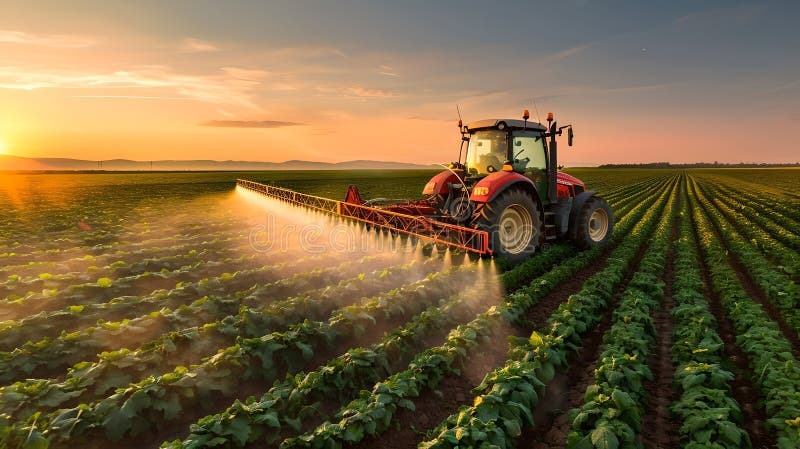
The Sub Mission on Agricultural Mechanization (SMAM), operational since 2014-15 and now under the umbrella of Rashtriya Krishi Vikas Yojana (RKVY), aims to bring mechanization benefits to small and marginal farmers, including women farmers. The scheme promotes Custom Hiring Centres (CHCs), establishment of Hi-tech Hubs, and distribution of agricultural machinery on subsidy.
From 2014-15 to 2025-26, central funds amounting to Rs. 9404.47 crore have been released. Over 21.61 lakh machines have been distributed, along with establishment of 27,554 CHCs, 646 Hi-tech Hubs, and 25,608 Farm Machinery Banks (FMBs). As a result, farm power availability has increased significantly from 1.73 kW/ha in 2013-14 to 2.49 kW/ha in 2018-19, reflecting improved mechanization levels.
Prime Minister Dhan Dhaanya Krishi Yojana (DDKY)
Announced in the Union Budget 2025-26 and formally launched on 11th October 2025, the Prime Minister Dhan Dhaanya Krishi Yojana (DDKY) covers 100 districts. The scheme aims to enhance agricultural productivity, promote crop diversification, expand post-harvest storage infrastructure, improve irrigation facilities, and facilitate access to credit. It operates through convergence of 36 existing schemes across 11 departments, along with state schemes and private partnerships.
Digital Agriculture Mission and AgriStack
A major thrust has been given to digital transformation under the Digital Agriculture Mission, which envisions creation of a Digital Public Infrastructure (DPI) for Agriculture. Central to this is AgriStack, comprising three foundational registries: Geo-Referenced Village Maps, Crop Sown Registry, and Farmers Registry. These databases, maintained by States and UTs, establish a single source of truth for farmer identity, land records, and crop data.
The introduction of Farmer ID enables seamless integration of Direct Benefit Transfer (DBT) schemes such as PM Kisan, PMFBY, MSP procurement, credit delivery, and disaster relief. As of 4 February 2026, over 8.48 crore Farmer IDs have been generated nationwide.
Digital Crop Survey and Decision Support Systems
The Digital Crop Survey provides plot-level crop visibility and supports evidence-based planning for procurement and logistics. The Krishi Decision Support System (KDSS) integrates satellite imagery, weather data, soil information, and GIS tools to deliver targeted advisories to farmers.
The Government has also introduced Kisan e-Mitra, an AI-powered voice chatbot assisting farmers with queries related to PM Kisan Samman Nidhi and other schemes. Supporting 11 regional languages, it handles over 8,000 queries daily and has responded to more than 95 lakh queries so far.
The National Pest Surveillance System leverages AI and Machine Learning to detect pest infestations across 65 crops and 400+ pests, assisting over 10,000 extension workers in timely intervention.
Seed Authenticity Traceability & Holistic Inventory (SATHI)
The SATHI platform streamlines seed production, certification, distribution, and traceability across India. By establishing a National Seed Grid (NSG), it integrates stakeholders into a unified digital platform ensuring seed quality and transparency.
Through these comprehensive measures combining sustainable agriculture practices, farm mechanization, risk management, and digital innovation, the Government is working towards building a climate-resilient and technology-driven agricultural ecosystem that empowers farmers and strengthens food security.