
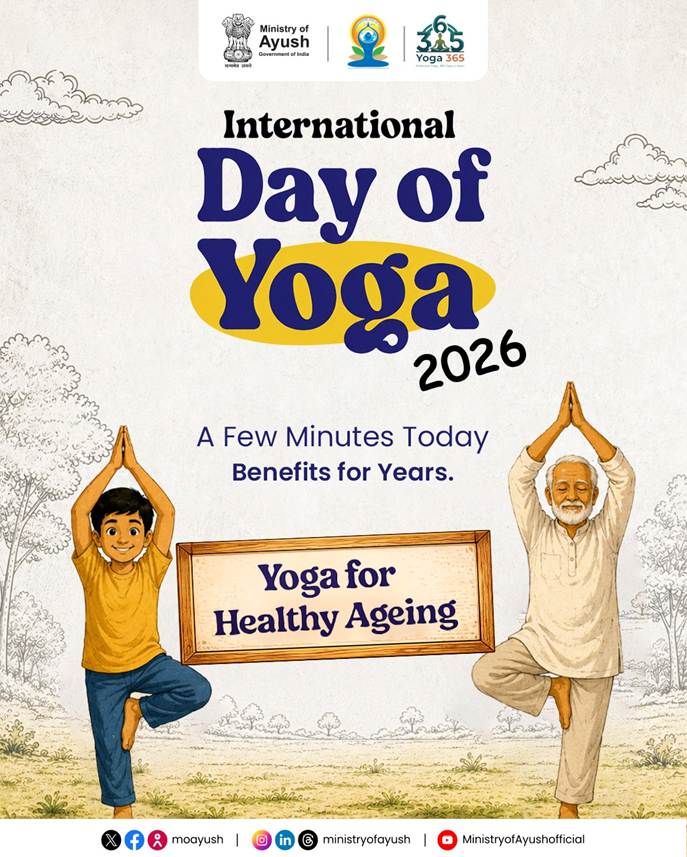
The 12th International Day of Yoga (IDY) 2026, to be celebrated on 21 June 2026, will be observed under the theme “Yoga for Healthy Ageing.” The theme reflects the increasing global acceptance of yoga as a holistic practice that supports physical fitness, mental well-being, emotional balance, and healthy longevity.
Rooted in India’s ancient traditions and now practiced worldwide, yoga has become an important pillar of preventive healthcare and wellness. This year’s theme emphasizes the importance of improving not just lifespan but also “healthspan”—the number of years people live in good health and independence.
Union Ayush Minister Highlights Importance of Graceful Ageing
Union Minister of State (Independent Charge) for Ayush and Minister of State for Health and Family Welfare Shri Prataprao Jadhav emphasized the relevance of this year’s theme in today’s changing demographic landscape.
According to the Minister, as life expectancy continues to rise, learning the art of ageing gracefully and healthily has become essential. He noted that India’s ancient sages and yogis demonstrated how yoga and spiritual discipline could contribute to longevity, vitality, and overall well-being.
The Government believes that yoga offers a practical and accessible solution for maintaining physical mobility, mental clarity, and emotional resilience throughout the ageing process.
Yoga Supports Better Healthspan Alongside Longer Lifespan
Unlike conventional exercise routines, yoga combines:
- Physical postures (Asanas)
- Breathing techniques (Pranayama)
- Meditation
- Mindfulness practices
Together, these practices help improve flexibility, balance, cardiovascular health, respiratory function, stress management, and cognitive wellness.
For senior citizens, regular yoga practice can enhance independence, reduce the risk of falls, support joint mobility, and contribute to better quality of life.
Scientific Research on Yoga and Healthy Ageing Continues to Grow
The global scientific community is increasingly recognizing yoga’s role in healthy ageing.
According to data available through PubMed Central, research publications related to “Yoga for Healthy Aging” have witnessed remarkable growth over the past decade.
- 2014: 183 research papers
- 2020: More than 500 publications
- 2025: 1,207 research papers
This consistent rise in scientific studies demonstrates growing evidence supporting yoga’s effectiveness in addressing age-related physical and mental health challenges.
The expanding body of research reinforces India’s traditional understanding that healthy ageing depends on maintaining harmony between physical, mental, emotional, and social well-being.
Growing Silver Economy Creates New Opportunities
The focus on healthy ageing aligns with the rapid expansion of the global silver economy, which includes products and services designed for senior citizens.
In India, the senior-focused market covering healthcare, rehabilitation, assisted living, digital health services, wellness solutions, and elder care is estimated to be worth nearly ₹73,000 crore, with significant future growth expected.
As individuals aged 45 to 64 increasingly seek preventive healthcare and wellness-oriented lifestyles, yoga is emerging as a cost-effective and sustainable approach to supporting active ageing.
Ministry of Ayush Promotes Evidence-Based Yoga Programmes
The Ministry of Ayush has introduced several initiatives to encourage year-round adoption of yoga and strengthen its role in preventive healthcare.
One of the major initiatives is the “10 Yoga Protocols for Non-Communicable Diseases (NCDs) and Target Groups.”
This evidence-based framework includes a dedicated protocol specifically designed for elderly individuals, focusing on:
- Improved flexibility
- Better balance
- Enhanced mobility
- Stronger respiratory function
- Emotional well-being
These protocols provide age-appropriate yoga practices tailored to the needs of senior citizens.
Yoga 365 Initiative Encourages Daily Practice
To move beyond annual celebrations, the Ministry is promoting the “Yoga 365” initiative, encouraging citizens to make yoga a part of their daily routine.
The programme leverages digital platforms and home-based practice modules, making yoga accessible to people regardless of location or age.
The initiative aims to build a culture where yoga becomes an everyday wellness habit rather than a once-a-year activity.
Yoga Samavesh Promotes Inclusive Wellness
Another significant initiative is “Yoga Samavesh,” which seeks to extend yoga benefits to underserved and vulnerable communities.
The programme includes:
- Chair yoga sessions
- Low-impact yoga routines
- Community wellness programmes
- Senior-friendly exercises
These inclusive practices help elderly citizens maintain independence, improve social engagement, and enhance overall physical and mental health.
Innovation and Elder Care Go Hand in Hand
The IDY 2026 theme also complements broader government initiatives supporting India’s ageing population.
Programmes such as the Seniorcare Ageing Growth Engine (SAGE) encourage innovation, entrepreneurship, and startup participation in elderly care solutions.
As awareness of yoga’s preventive benefits grows, opportunities are expanding for wellness professionals, caregivers, digital health providers, and community organizations involved in geriatric care and holistic wellness.
Yoga for Healthy Ageing Reflects India’s Timeless Wisdom
The theme “Yoga for Healthy Ageing” delivers an important global message as societies adapt to changing demographic trends.
By encouraging preventive healthcare, active lifestyles, mental wellness, and holistic development, yoga offers a practical pathway to improving quality of life at every stage of life.
As the world celebrates the 12th International Day of Yoga on 21 June 2026, the theme reinforces India’s commitment to sharing an ancient tradition that supports healthy, active, independent, and graceful ageing for people across the globe.