
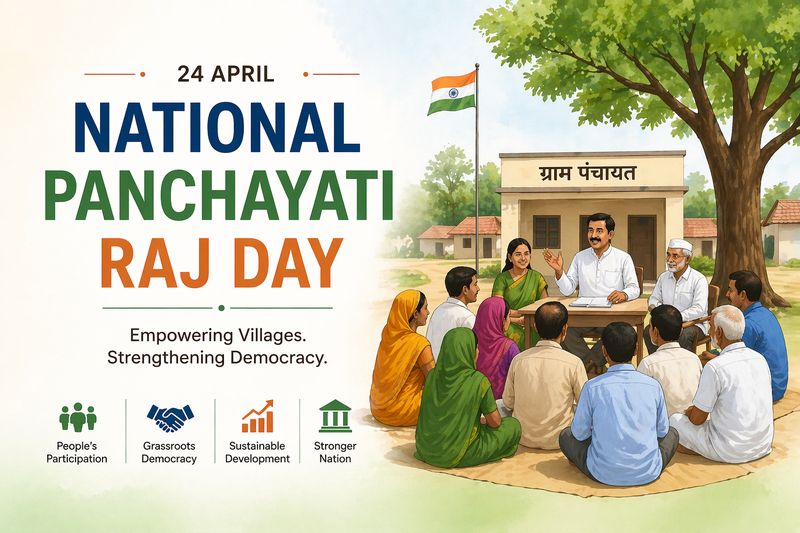
India will celebrate National Panchayati Raj Day (NPRD) on 24th April 2026, marking a significant milestone in the country’s democratic journey. The day commemorates the enactment of the historic 73rd Constitutional Amendment Act, which granted constitutional status to Panchayati Raj Institutions (PRIs) and strengthened local self-governance across rural India.
This year holds special importance as it marks 33 years of empowering grassroots democracy, reinforcing the role of villages in shaping India’s development.
National Celebration at Vigyan Bhawan, New Delhi
The central event will be आयोजित at Vigyan Bhawan, New Delhi, under the leadership of the Ministry of Panchayati Raj. The event will be attended by senior government officials, elected Panchayat representatives, and policymakers from across the country.
A key highlight of the programme will be the message of Prime Minister Narendra Modi, which will be read out and simultaneously shared across States and Union Territories. This message will reach lakhs of elected representatives and grassroots functionaries, reinforcing the vision of participatory governance.
The event will also be graced by Union Minister of State Prof. S. P. Singh Baghel and senior officials including the Secretary of the Ministry.
Understanding the Importance of Panchayati Raj System
The Panchayati Raj system represents a three-tier governance structure:
- Gram Panchayat (village level)
- Panchayat Samiti (block level)
- Zilla Parishad (district level)
This system ensures that decision-making power reaches the grassroots, allowing local communities to actively participate in governance, development planning, and implementation of schemes.
Since its constitutional recognition, Panchayati Raj has played a vital role in:
- Strengthening rural governance
- Enhancing accountability and transparency
- Promoting inclusive development
- Empowering women and marginalized communities
Launch of Panchayat Advancement Index (PAI) 2.0 and Heritage Publications
A major highlight of NPRD 2026 will be the release of:
- Panchayat Advancement Index (PAI) 2.0 Report
- Three books under the “Meri Panchayat Meri Dharohar” initiative
These publications will focus on preserving and showcasing India’s rich rural heritage, including:
- Rural heritage of Tripura
- Cultural legacy of Tirupati
- “Uttarkashi: Saumya Kashi” highlighting Himalayan traditions
These efforts aim to blend development with cultural preservation, ensuring that rural identity remains strong in the journey toward modernization.
Celebrations Across India: From Villages to States
National Panchayati Raj Day will not be limited to Delhi. It will be celebrated across the country at multiple levels:
- State and District-level events
- Block-level programmes
- Gram Sabha meetings in villages
Gram Panchayats will organize Gram Sabha sessions, encouraging citizens to participate in decision-making and reaffirm the spirit of democratic decentralization.
Role in Achieving Viksit Bharat Vision
Panchayati Raj Institutions are central to achieving the vision of a Viksit Bharat (Developed India). By enabling local governance, PRIs ensure that development is:
- Inclusive
- Need-based
- Community-driven
They act as the backbone of rural transformation by implementing key government schemes and addressing local challenges effectively.
Conclusion: Strengthening Democracy from the Ground Up
National Panchayati Raj Day 2026 is not just a celebration—it is a reminder of India’s commitment to empowering its villages and citizens. As the country marks 33 years of the 73rd Constitutional Amendment, the focus remains on building a stronger, more inclusive, and participatory democracy.
With continued efforts and community participation, Panchayati Raj Institutions will remain a cornerstone of India’s democratic and developmental framework.