
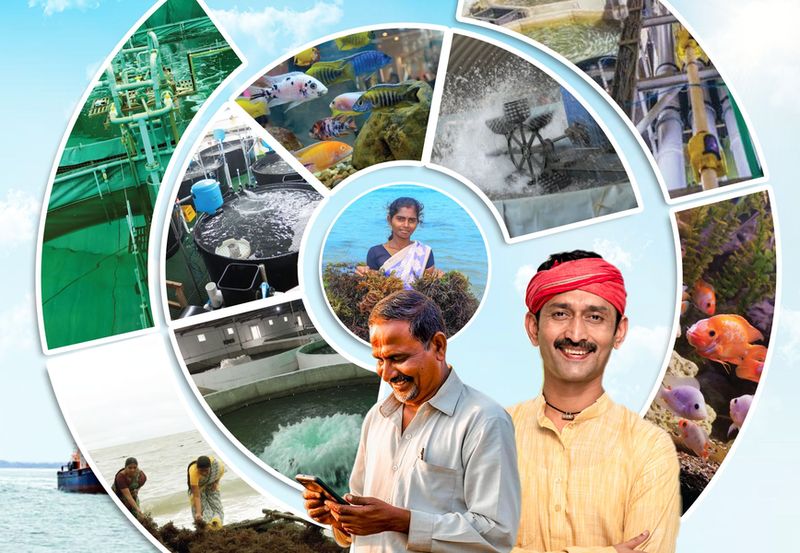
India’s fisheries sector is undergoing a transformational shift, evolving from a traditional production-driven industry into a technology-enabled, innovation-led ecosystem. With strong government support, rising entrepreneurial participation, and rapid adoption of advanced technologies, the sector is now emerging as a key contributor to food security, employment, and economic growth.
Growing Importance of the Fisheries Sector
The fisheries and aquaculture sector plays a vital role in India’s economy, supporting millions of livelihoods across coastal and rural regions. Since 2015, the Government of India has invested over ₹39,272 crore to promote sustainable development in this sector. This investment has catalyzed the rise of 300+ fisheries start-ups, focusing on improving productivity, efficiency, and sustainability.
These start-ups are addressing critical challenges such as:
- Affordable and nutritious aquaculture feed
- Sustainable farming practices
- Efficient seafood supply chains
- Waste reduction and value maximization
- Integration of traditional knowledge with modern technology
Technology Revolution in Fisheries
A major driver of this transformation is the integration of cutting-edge technologies such as:
- Artificial Intelligence (AI) & Machine Learning (ML): Used for disease prediction, feed optimization, biomass estimation, and risk management.
- Internet of Things (IoT): Enables real-time monitoring of water quality, pond health, and environmental conditions.
- Blockchain Technology: Ensures traceability and transparency across the seafood value chain.
- Recirculatory Aquaculture Systems (RAS) & Biofloc Technology: Facilitate high-density, low-water farming with minimal environmental impact.
These innovations are helping farmers reduce costs, increase yields, and adopt precision aquaculture practices.
Drone Technology: A Game Changer
The adoption of drone technology is further enhancing operational efficiency in fisheries. Drones are being used for:
- Pond mapping and monitoring
- Water-quality assessment
- Biomass estimation
- Detection of environmental risks
A notable initiative by the Department of Fisheries, in collaboration with ICAR–Central Inland Fisheries Research Institute, aims to develop drones capable of transporting 100 kg of live fish over 10 km, opening new avenues for fast and efficient logistics.
Strengthening Post-Harvest Infrastructure
Post-harvest losses have long been a challenge in the fisheries sector. To address this, the government is promoting:
- Cold-chain logistics
- Solar-powered chilling systems
- Smart ice-production units
- AI-based quality grading systems
These measures ensure better preservation, reduce spoilage, and help maintain export-quality standards.
Government Initiatives Supporting Start-ups
Recognizing the importance of innovation, the government has launched several initiatives:
- Fisheries Startup Conclave: A platform for showcasing innovations and fostering collaboration.
- Fisheries Startup Grand Challenge: Provides grants, mentorship, and incubation support to promising start-ups.
- Matsya Manthan: A knowledge-sharing platform for discussing emerging technologies and policy frameworks.
Additionally, key institutions like National Fisheries Development Board and ICAR-Central Institute of Fisheries Education play a crucial role in research, incubation, and capacity building.
Fisheries Business Incubation Centres
To nurture entrepreneurship, five dedicated incubation centres have been established, including:
- Guwahati Biotech Park
- National Institute of Agricultural Extension Management
- ICAR-Central Institute of Fisheries Technology
These centres provide mentorship, training, and business development support, enabling start-ups to scale their innovations effectively.
Sustainability and Future Outlook
The integration of technology, policy support, and entrepreneurship is laying the foundation for a resilient and sustainable fisheries ecosystem. Emerging areas such as:
- Seaweed farming
- Satellite-based advisory systems
- Low-impact fishing gear
- Genetic improvement tools
are expanding the scope of innovation and ensuring long-term sectoral growth.
With continued government backing and increased private participation, India is well-positioned to become a global leader in sustainable fisheries and aquaculture.
Conclusion
The fisheries start-up ecosystem in India represents a powerful convergence of innovation, technology, and policy support. By addressing critical challenges and unlocking new opportunities, this ecosystem is not only enhancing productivity and sustainability but also contributing significantly to rural development, employment generation, and economic resilience.